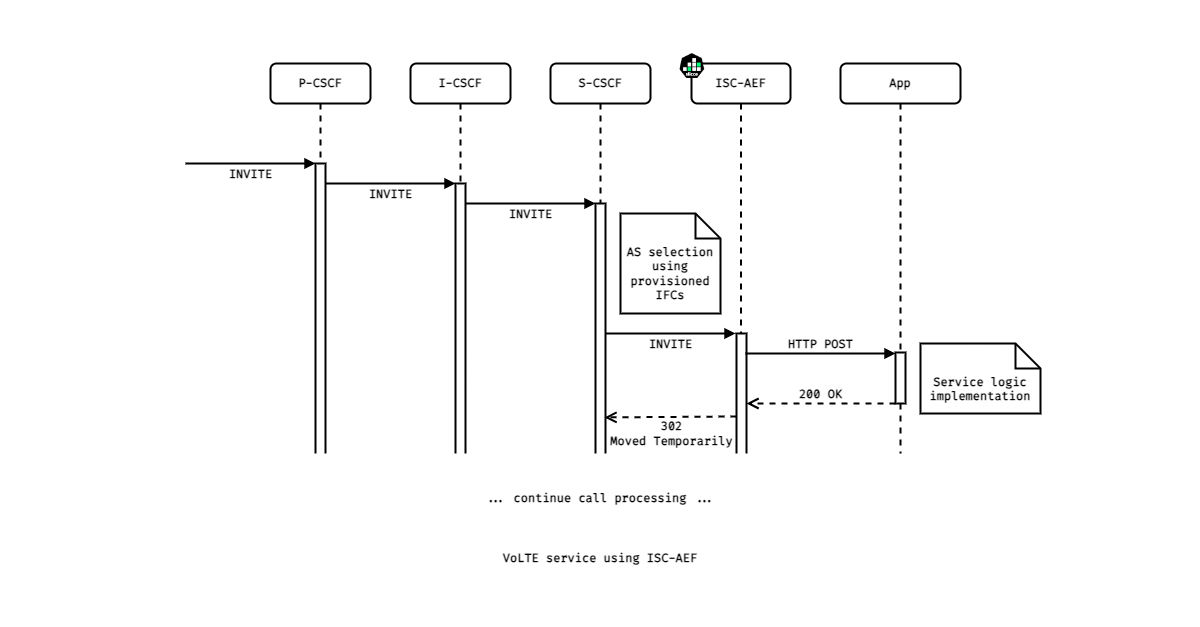
For decades, telecom services have been designed around a relatively simple principle: define a sequence of actions, execute it, and deliver a result. Whether in voice routing, messaging workflows, or charging scenarios, service logic has traditionally been structured as a chain of predefined steps triggered by a user action or a network event.
For decades, telecom services have been designed around a relatively simple principle: define a sequence of actions, execute it, and deliver a result. Whether in voice routing, messaging workflows, or charging scenarios, service logic has traditionally been structured as a chain of predefined steps triggered by a user action or a network event.
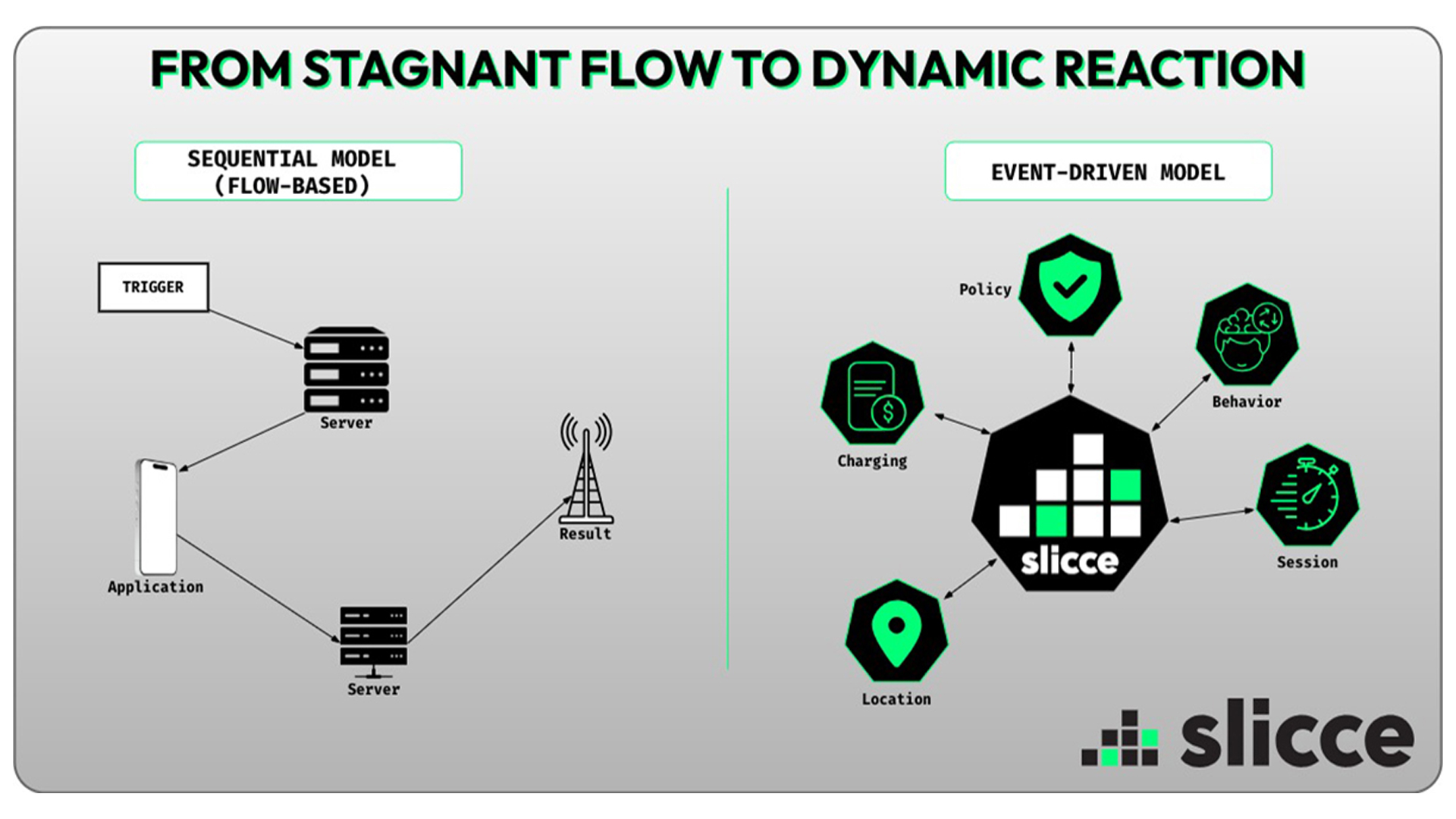
This model has proven extremely reliable. It aligns well with deterministic systems, where predictability and stability are essential. But as telecom networks evolve, with 5G standalone deployments, API exposure frameworks, and increasingly demanding real-time use cases, this sequential approach is beginning to show its limits.
What is changing is not just the technology stack, but the very nature of how the network behaves.
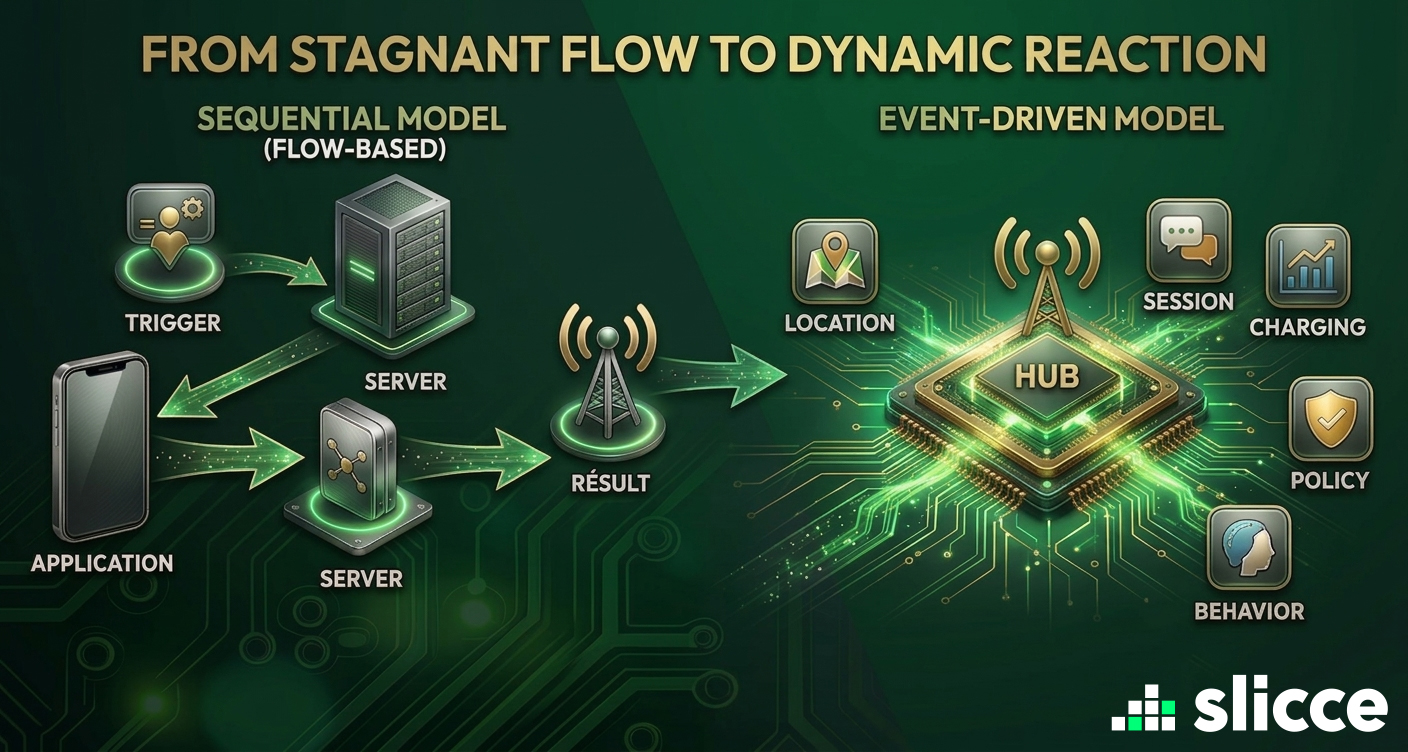
Modern telecom networks are no longer only executing flows. They are continuously generating signals. Location updates, session state changes, policy triggers, QoS variations, device behavior, all of these are emitted as events, often in real time and at massive scale. The network is no longer just a system that responds to requests; it has become a system that constantly describes its own state.
This shift introduces a fundamental change in how services are designed. Instead of asking "what is the next step in the flow?", systems increasingly need to answer a different question: "what should happen now, given what has just occurred?"
In other words, service logic is moving from sequence-driven execution to event-driven reaction.
This evolution brings clear advantages. First, it enables true real-time responsiveness. Services can adapt instantly to changing network conditions, whether it is adjusting quality of service, triggering charging events, or detecting anomalous behavior. Second, it introduces a level of decoupling that was difficult to achieve in traditional architectures. Network functions can emit events without knowing who will consume them, and applications can react without being tightly integrated into the core logic of the network.
This decoupling naturally leads to more composable systems. Instead of building rigid end-to-end services, operators can assemble capabilities dynamically by combining event sources and reaction mechanisms. This approach also aligns closely with cloud-native principles, where asynchronous processing, microservices, and streaming platforms are the norm rather than the exception.
However, this transformation is not without complexity. Moving to an event-driven model raises new architectural questions that are less visible in traditional telecom systems.
Consistency becomes a challenge when multiple distributed components react to the same event. Ensuring that actions occur in the correct order, or that no event is lost or duplicated, requires careful design. State management also becomes less obvious. In a system driven by reactions, the notion of a central, authoritative state is often replaced by distributed, evolving states that must remain coherent over time.
Latency and reliability introduce another layer of trade-offs. Real-time reactions demand low latency, but guaranteeing delivery and consistency can introduce delays. Finding the right balance depends heavily on the use case and the criticality of the service.
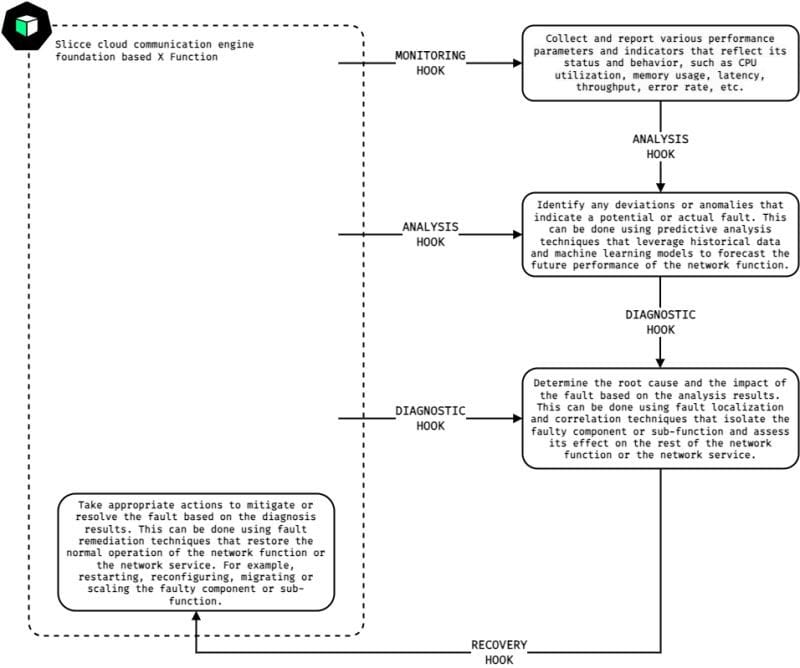
Observability, finally, becomes significantly more complex. In a sequential system, tracing a request from start to finish is relatively straightforward. In an event-driven architecture, a single trigger can lead to multiple asynchronous reactions across different components. Understanding system behavior requires correlating events, logs, and actions across the entire ecosystem.
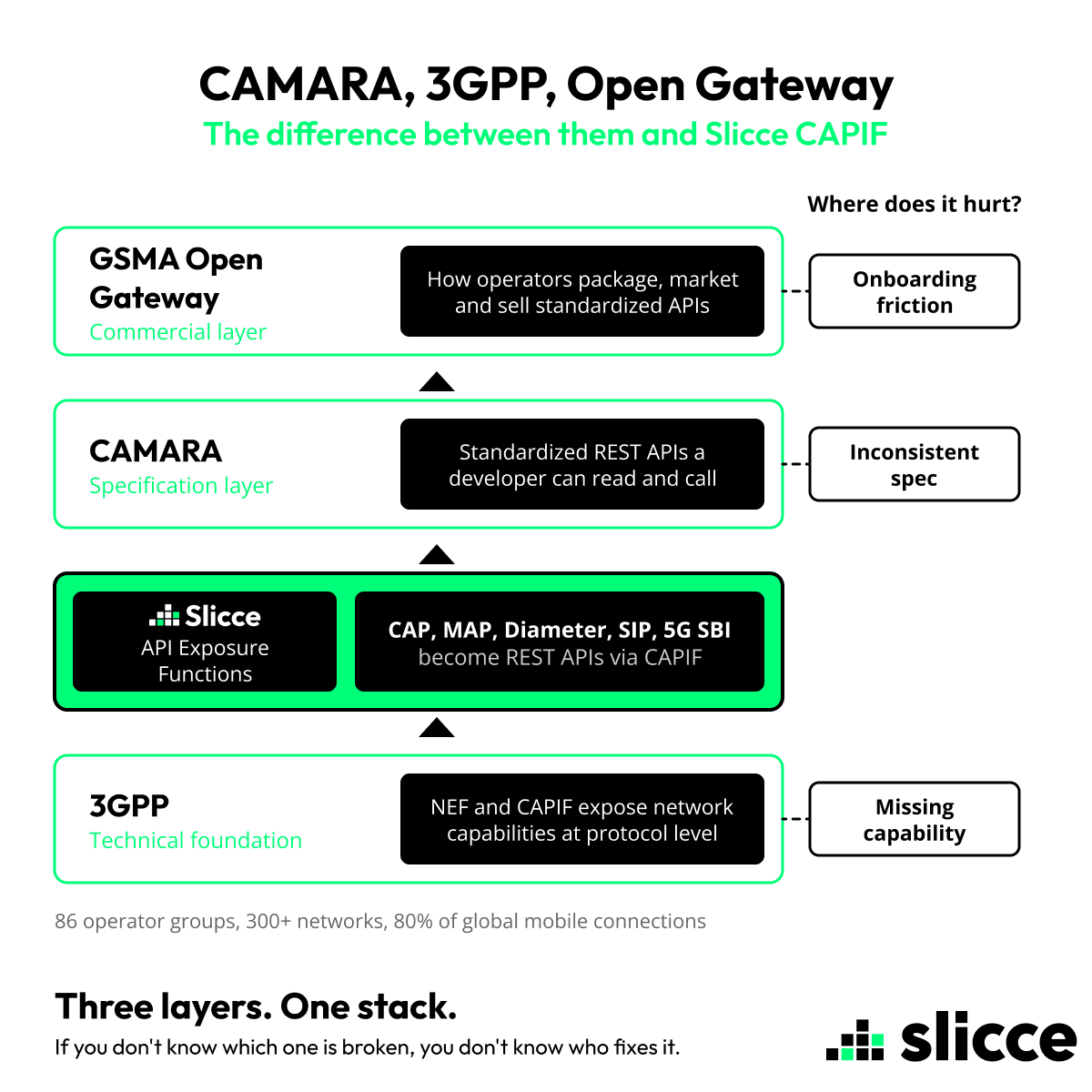
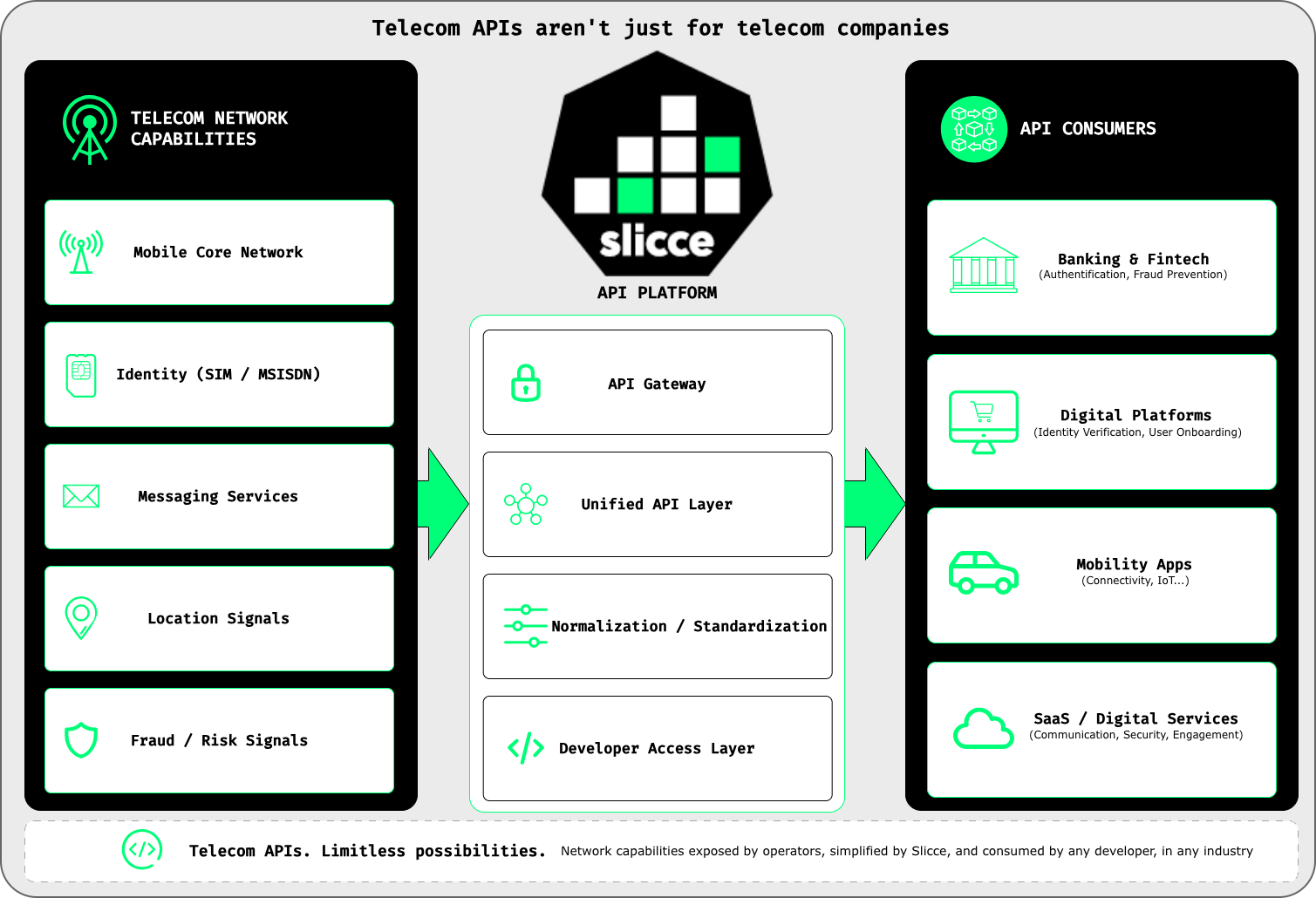
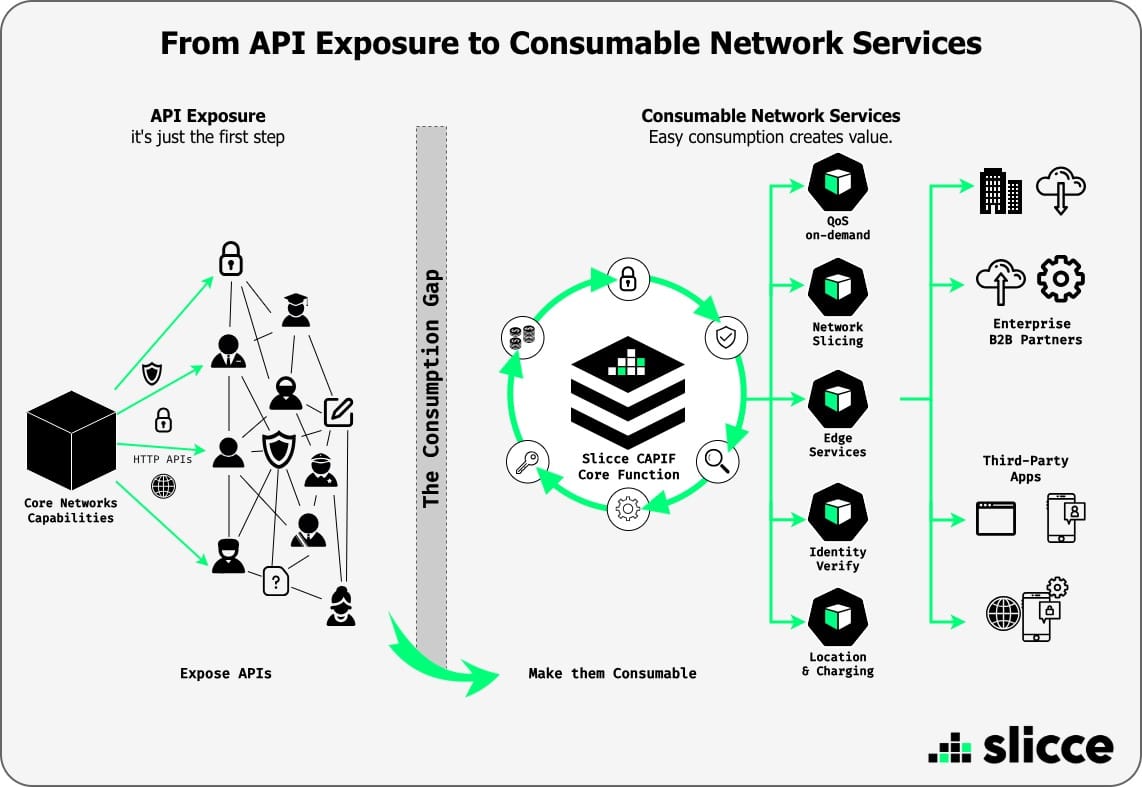
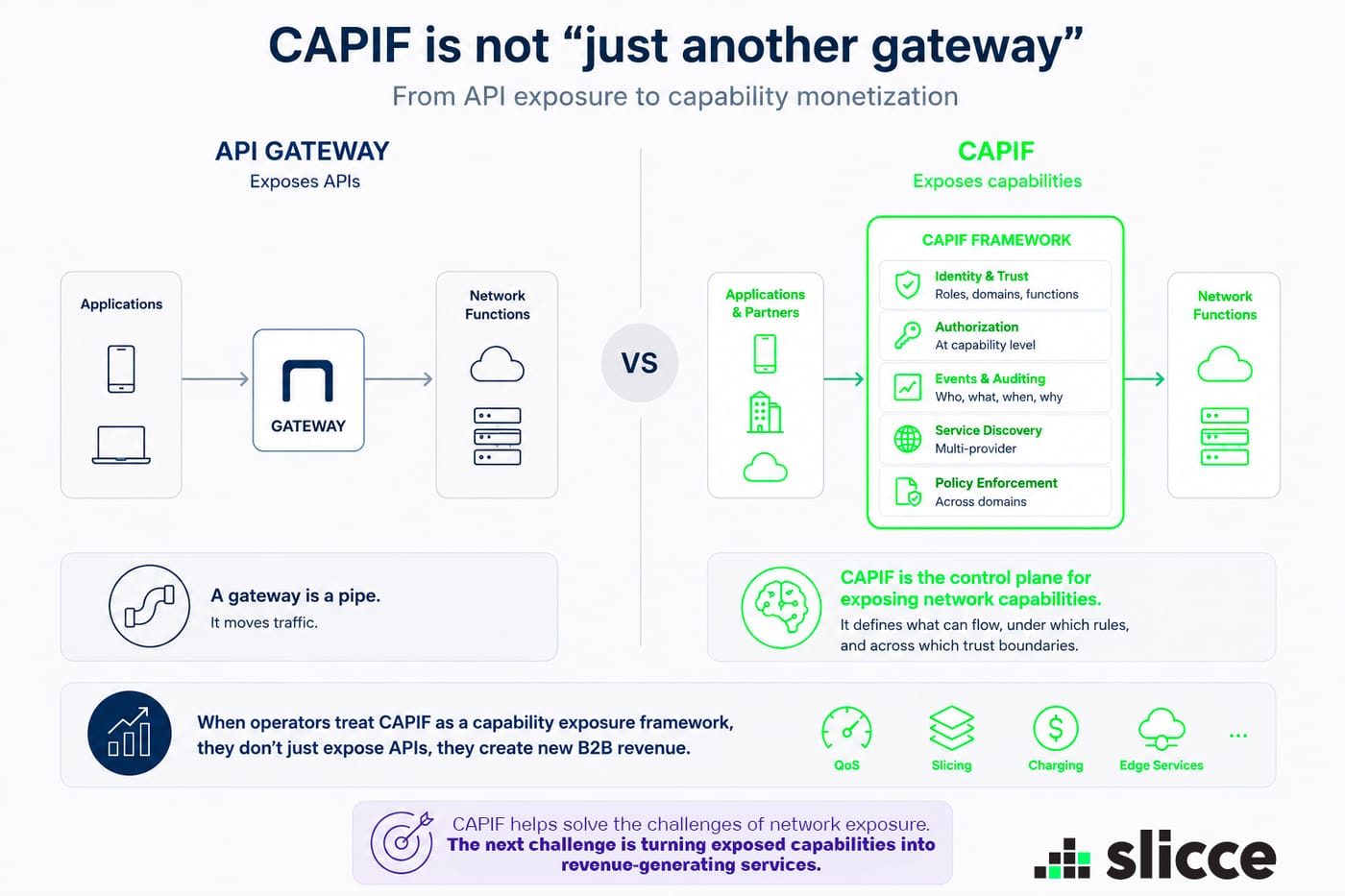
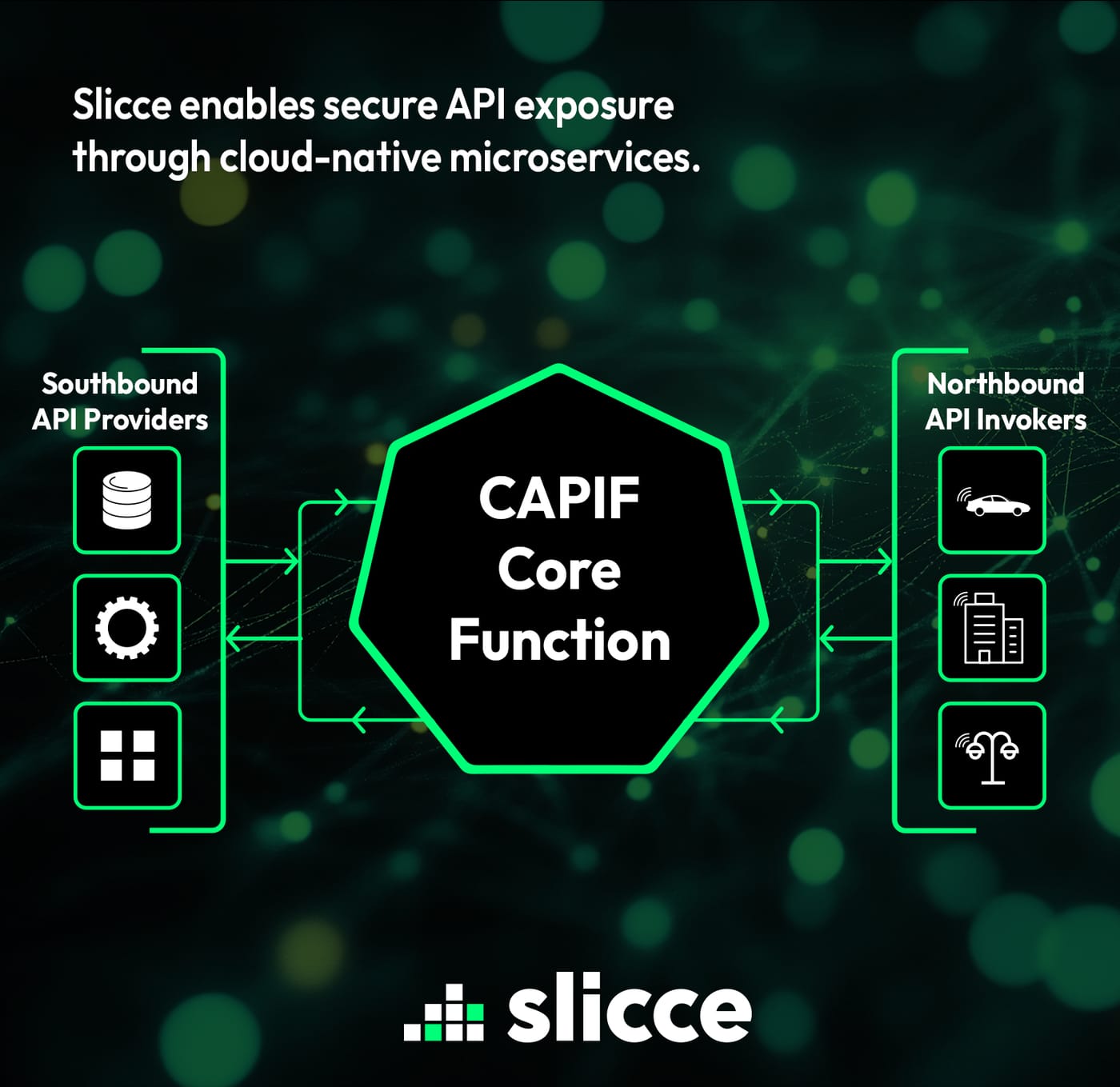
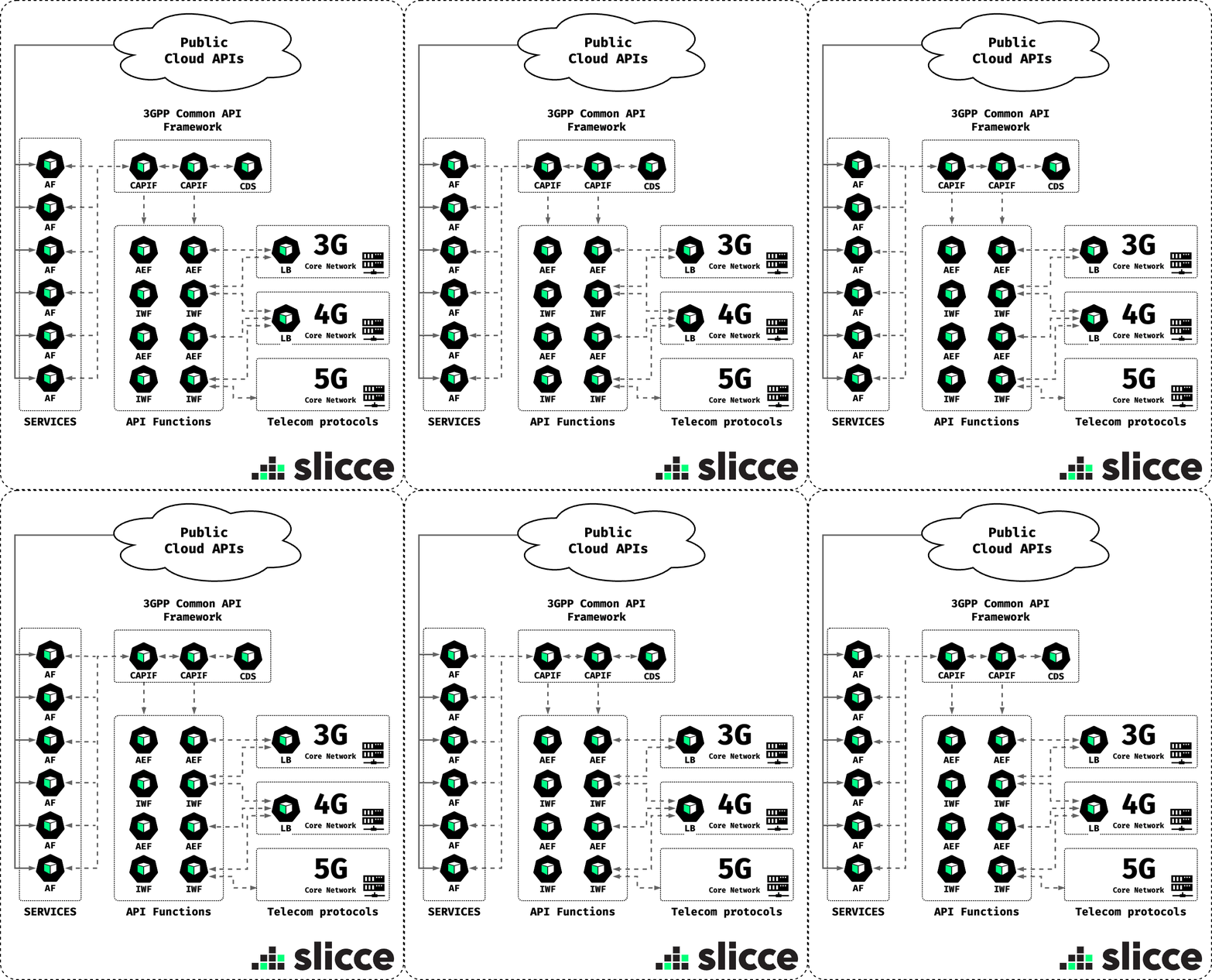
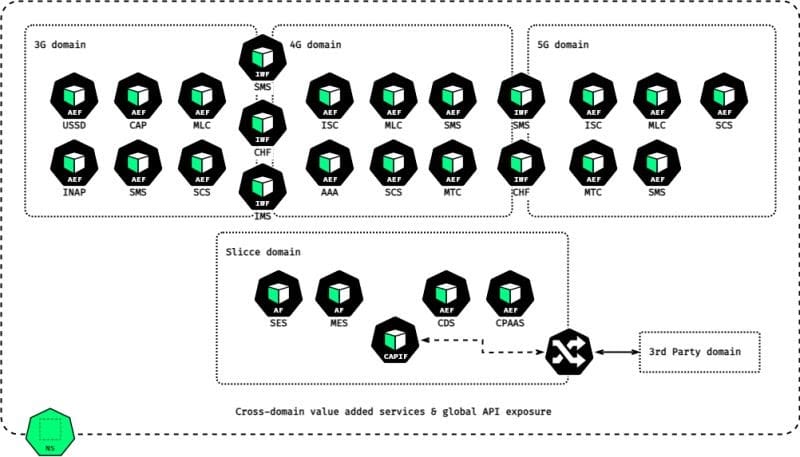
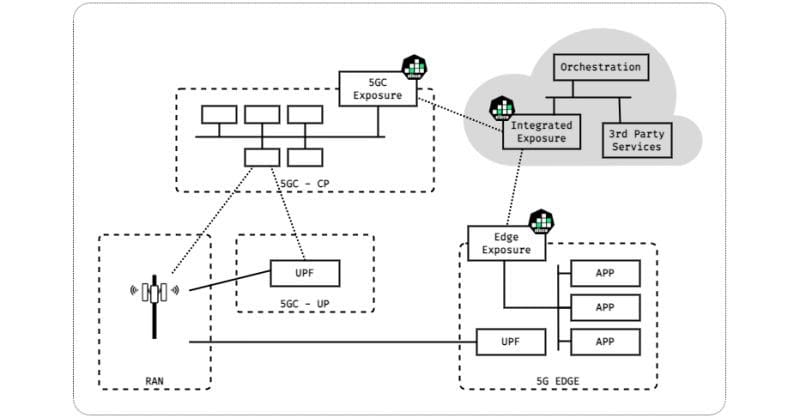
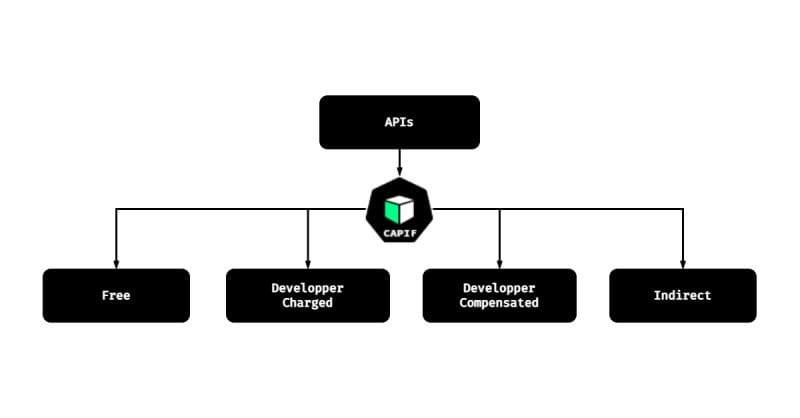
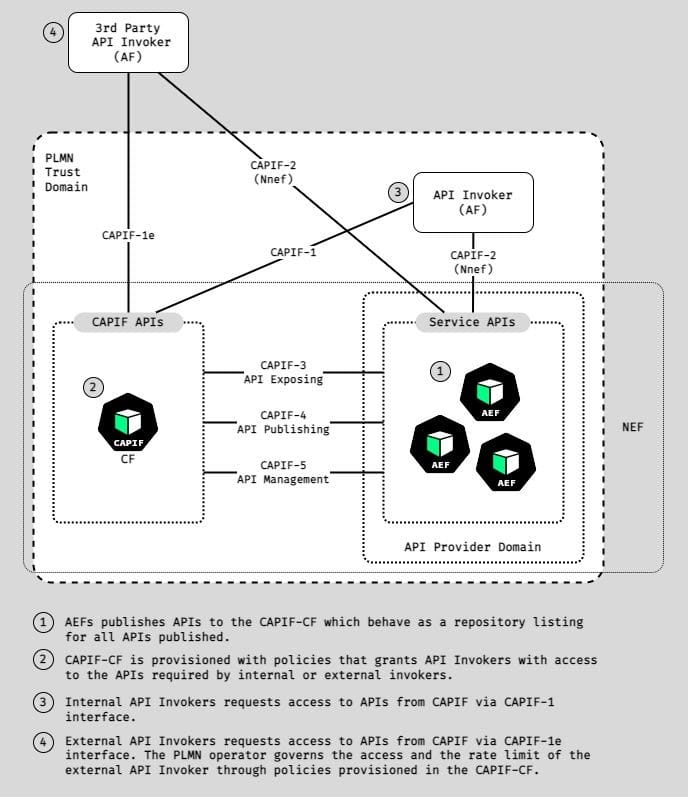
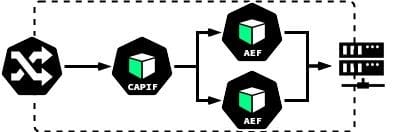
Within the 3GPP ecosystem, these changes are already visible. While frameworks such as CAPIF have initially focused on exposing network capabilities through APIs, there is a growing emphasis on exposing events themselves. Network functions are not only callable anymore; they are becoming observable in real time. Subscription-based mechanisms, event notifications, and streaming interfaces are progressively complementing traditional request-response models.
This evolution suggests a broader transformation. Telecom systems are moving away from being purely execution engines toward becoming reaction platforms. The value is no longer only in what the network can do when asked, but in how it can respond, adapt, and interact continuously with its environment.
At Slicce, this shift is something we encounter daily when working on API exposure, service orchestration, and real-time network interaction. It reinforces a simple observation: building reactive systems is not just about introducing new technologies, but about rethinking how network capabilities are structured, exposed, and consumed.
Ultimately, the next wave of telecom innovation will depend less on adding new capabilities, and more on how effectively those capabilities can be orchestrated in real time. In an environment where applications expect immediate feedback and context-aware behavior, the ability to react quickly and intelligently becomes a defining factor.
In that sense, the future of telecom may not be about building more complex flows, but about designing systems that are inherently responsive to change. Because in a real-time world, value is created not just by execution, but by reaction.